 EN
EN

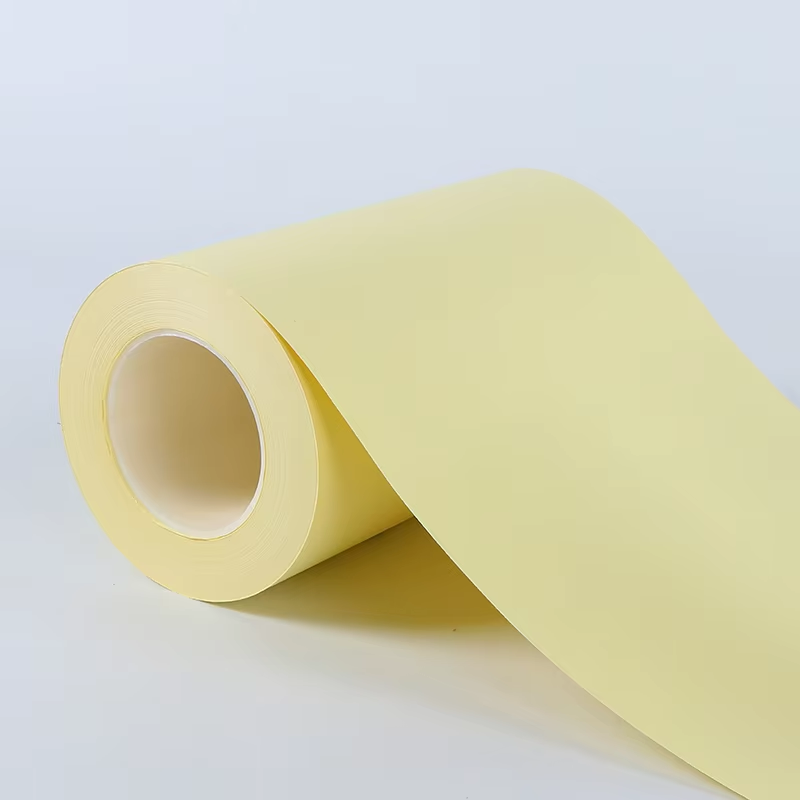
Selecting the appropriate silicone release paper for your manufacturing or packaging operation is a critical decision that directly impacts production efficiency, product quality, and cost management. Whether you're working in label production, adhesive tape manufacturing, composite layup, or food packaging, understanding the key selection criteria for silicone release paper ensures optimal performance in your specific application. The right choice balances release force requirements, substrate compatibility, thermal stability, and processing conditions while meeting your operational and budgetary constraints.
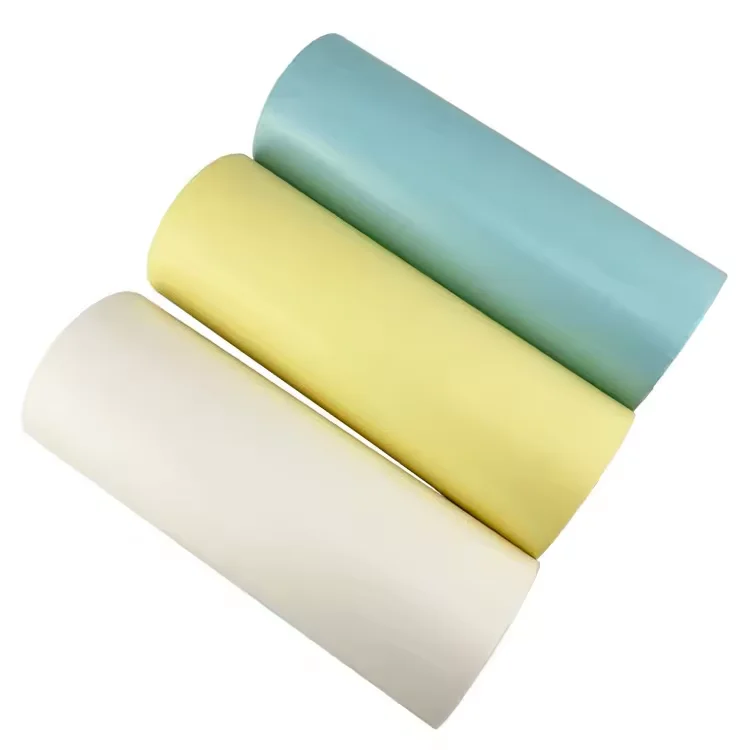
This comprehensive guide walks you through the essential factors that determine which silicone release paper best fits your needs. From evaluating base paper characteristics and silicone coating properties to matching release levels with adhesive systems and considering environmental conditions, each decision point influences the functional outcome. By systematically assessing these variables against your application requirements, you can confidently specify the right material that delivers consistent release performance, protects your products during processing, and supports your quality standards throughout the production cycle.
Understanding Base Paper Substrate Selection
Material Composition and Density Considerations
The foundation of any silicone release paper begins with the base substrate, and this choice fundamentally determines the material's structural integrity and functional behavior. Glassine paper, kraft paper, and clay-coated paper each offer distinct advantages depending on your application demands. Glassine substrates provide exceptional smoothness and density, making them ideal for applications requiring high dimensional stability and minimal surface texture transfer. The supercalendered manufacturing process creates a tight fiber structure that resists moisture penetration and maintains consistent thickness under pressure, which is particularly valuable when working with pressure-sensitive adhesives that demand uniform release characteristics.
Kraft paper substrates deliver superior tensile strength and tear resistance, making them the preferred choice for heavy-duty industrial applications where mechanical stress during handling and processing is significant. The longer fiber length in kraft pulp creates a more robust sheet structure that withstands the rigors of high-speed converting operations, die-cutting processes, and demanding lamination cycles. When evaluating base paper density, consider that higher basis weights generally provide better dimensional stability and puncture resistance, but they also increase material costs and may affect web handling characteristics on your equipment. The density range typically spans from 40 to 150 grams per square meter, with your specific selection depending on the balance between structural requirements and economic factors.
Surface Smoothness and Caliper Uniformity
Surface smoothness of the base paper directly influences the quality of the silicone coating application and the ultimate release performance of the finished product. Smooth substrates accept silicone coatings more uniformly, creating consistent release properties across the entire sheet surface and minimizing defects such as pinholes or coating skips that can compromise functionality. Sheffield smoothness values, which quantify surface texture, should align with your adhesive sensitivity requirements—ultra-smooth surfaces work best with aggressive adhesives requiring precise release control, while moderately textured surfaces may suffice for less demanding applications where some variation is acceptable.
Caliper uniformity, or thickness consistency across the sheet and throughout production runs, affects how silicone release paper performs during automated processing. Variations in caliper can cause tension irregularities during unwinding, lead to misregistration in printing or laminating operations, and create inconsistent nip pressure in coating applications. Specify caliper tolerances appropriate to your converting equipment's sensitivity—high-speed operations with precision registration requirements demand tighter tolerances, typically within plus or minus three percent, while less critical manual processes can accommodate broader ranges. Remember that caliper uniformity also impacts roll buildability, with consistent thickness promoting even winding tension and preventing telescoping or core crushing during storage and transportation.
Moisture Resistance and Dimensional Stability
Base paper moisture characteristics significantly influence how silicone release paper behaves under varying environmental conditions and during different processing stages. Natural cellulose fibers are hygroscopic, meaning they absorb and release moisture in response to ambient humidity changes, which causes dimensional shifts that can disrupt precise converting operations. Glassine papers naturally offer better moisture resistance than standard kraft papers due to their dense fiber structure, but additional treatments such as clay coating or synthetic fiber blends can further enhance barrier properties when moisture sensitivity is a critical concern.
Dimensional stability becomes particularly important when silicone release paper must maintain registration through multiple processing steps, such as sequential printing, coating, and laminating operations. Papers with high dimensional stability maintain their length and width measurements despite humidity fluctuations, temperature variations during thermal processing, and mechanical stress from web tension. When selecting silicone release paper for applications involving extended storage periods or exposure to varying environmental conditions, prioritize substrates with proven dimensional stability in your specific humidity and temperature range. This prevents issues such as edge curl, sheet distortion, and release force variation that can arise when base papers expand or contract unpredictably.
Evaluating Silicone Coating Specifications
Release Force Matching and Adhesive Compatibility
The release force characteristic of silicone release paper represents the force required to separate the adhesive material from the release surface, and selecting the appropriate level is fundamental to successful application performance. Release forces typically range from ultra-light levels around 5 grams per inch width to heavy release exceeding 200 grams per inch, with the optimal selection depending on your specific adhesive formulation, processing conditions, and end-use requirements. Light release silicone coatings work best with aggressive permanent adhesives that form strong bonds quickly, allowing clean separation during liner removal while preventing premature adhesive transfer or flagging during die-cutting and matrix stripping operations.
Medium release silicone release paper serves the broadest range of general-purpose pressure-sensitive adhesive applications, providing sufficient anchorage during processing and storage while enabling smooth, controlled release during label application or tape dispensing. Heavy release coatings become necessary when working with low-tack removable adhesives, silicone adhesives, or applications requiring extended contact time between the adhesive and liner without migration or strike-through. When matching release level to your adhesive system, obtain actual adhesive samples and conduct release testing under conditions that replicate your processing environment, including temperature, dwell time, and peel angle, to ensure compatibility and prevent production issues such as inadequate anchorage, difficult release, or adhesive transfer.
Coating Weight and Coverage Quality
Silicone coating weight, measured in grams per square meter or pounds per ream, determines the thickness of the release layer and directly affects both performance characteristics and material cost. Standard coating weights range from 0.5 to 2.0 grams per square meter, with higher weights generally providing more durable release surfaces that resist abrasion, withstand repeated contact, and maintain consistent performance through demanding converting processes. Lighter coatings prove economical for single-use applications where the silicone release paper contacts the adhesive only briefly, while heavier coatings justify their increased cost in applications involving extended storage, multiple handling cycles, or harsh processing conditions that could compromise thinner coatings.
Coating coverage quality encompasses uniformity of silicone distribution across the substrate surface, absence of defects such as skips or pinholes, and consistency of release properties throughout production batches. High-quality silicone release paper exhibits uniform coating that creates predictable release behavior regardless of where on the sheet the adhesive contacts the surface. Inadequate coverage or coating defects manifest as variable release forces, localized adhesive transfer, or unpredictable liner removal behavior that disrupts automated processing. When evaluating coating quality, request certificates of analysis that document coating weight consistency, release force variation across sheets and between lots, and defect rates to ensure the material meets your quality thresholds and process control requirements.
Single-Side Versus Double-Side Coating Decisions
Determining whether single-sided or double-sided silicone release paper best serves your application depends on how the material functions within your specific process flow and product construction. Single-sided silicone release paper, with silicone coating on only one face, works effectively when the material serves as a simple protective liner that contacts adhesive on only one surface, such as in label sheets, adhesive tape rolls, or pre-cut adhesive components. The uncoated reverse side can accept printing, provides better friction for roll handling, and costs less than double-sided alternatives, making it the economical choice for straightforward liner applications.
Double-sided silicone release paper becomes necessary when both faces must provide release properties, such as in interleaving applications where adhesive materials stack with release liner between layers, in die-cut matrix stripping where the liner contacts adhesive on both sides during waste removal, or in transfer tape applications where adhesive releases from one silicone surface and then temporarily bonds to another. The dual coating also prevents blocking when silicone release paper rolls or stacks make surface-to-surface contact during storage, as the silicone coating on one sheet's face contacts the backing of the adjacent sheet. Consider your material handling patterns, product construction requirements, and whether both surfaces require release functionality to determine which coating configuration optimizes performance while controlling costs.
Matching Process Conditions and Performance Requirements
Temperature Resistance and Thermal Processing Compatibility
The temperature exposure that silicone release paper experiences during your manufacturing process fundamentally influences material selection, as both the base substrate and silicone coating must maintain structural integrity and functional performance across your operating temperature range. Standard silicone coatings remain stable and maintain consistent release properties from approximately minus 20 degrees Celsius to 150 degrees Celsius, covering most ambient and moderately elevated temperature applications. When processes involve higher temperatures, such as hot-melt adhesive coating operations, thermal lamination cycles, or composite curing in heated presses, specify high-temperature silicone release paper formulated with platinum-catalyzed silicone systems that resist degradation and maintain release characteristics at temperatures reaching 200 degrees Celsius or higher.
Base paper selection also impacts thermal performance, as certain substrates tolerate heat exposure better than others without discoloration, dimensional distortion, or mechanical property degradation. Glassine and clay-coated papers generally offer superior heat resistance compared to uncoated kraft papers, maintaining dimensional stability and preventing yellowing or brittleness when exposed to elevated processing temperatures. When evaluating thermal requirements for silicone release paper, consider not only the maximum temperature but also the duration of exposure and whether heating occurs under pressure, as these factors compound thermal stress. Request thermal aging data and conduct trials under your actual process conditions to verify that the selected material maintains release force consistency, dimensional stability, and physical integrity throughout the thermal cycle.
Chemical Resistance and Contamination Prevention
Chemical compatibility between silicone release paper and the substances it contacts during processing and storage determines whether the material maintains its release properties and protects your adhesive products from contamination or degradation. Silicone coatings generally exhibit excellent resistance to polar solvents, weak acids and bases, and aqueous solutions, making them suitable for most adhesive formulations and typical industrial environments. However, certain aggressive solvents, strong oxidizing agents, and specialized chemical formulations can interact with either the silicone coating or base substrate, potentially causing release force changes, coating degradation, or migration of substances between the liner and adhesive.
When selecting silicone release paper for applications involving chemical exposure, identify all substances that may contact the material, including adhesive components, cleaning agents, processing aids, and environmental contaminants. Particular attention should focus on plasticizers, which can migrate from vinyl films or certain adhesive formulations into the release coating, and on residual solvents from solvent-based adhesives, which might interact with the base paper if the silicone coating contains pinholes or insufficient coverage. Specify silicone release paper with demonstrated chemical resistance to your specific exposure conditions, and when uncertainty exists, conduct compatibility testing by exposing material samples to your actual chemical environment for extended periods, then measuring release force stability and inspecting for physical changes such as discoloration, coating delamination, or substrate deterioration.
Converting and Processing Efficiency Factors
The interaction between silicone release paper and your converting equipment significantly influences production efficiency, yield rates, and final product quality, making processability a crucial selection criterion. Material characteristics such as stiffness, surface friction, electrostatic properties, and edge quality all affect how smoothly the paper feeds through coating machines, printing presses, die-cutting stations, and laminating equipment. Silicone release paper with appropriate stiffness feeds reliably through automated equipment without jamming, maintains registration during multi-step processes, and releases cleanly from cutting dies without edge tearing or adhesive flagging that creates waste and downtime.
Surface friction characteristics influence web handling behavior, with the uncoated side of single-sided silicone release paper requiring sufficient friction to drive properly on equipment rollers while the silicone-coated side must exhibit low enough friction to unwind smoothly without excessive tension buildup. Electrostatic charge generation during high-speed unwinding and rewinding can cause web handling problems such as blocking, attracting dust contamination, or creating spark discharge that poses safety concerns in certain environments. When your operation involves high-speed converting, printing, or other automated processes, evaluate silicone release paper specifically for its performance on your equipment, conducting trial runs at production speeds to identify any handling issues, registration problems, or quality defects before committing to large-volume purchases.
Addressing Application-Specific Selection Criteria
Industry-Specific Performance Standards
Different industries impose unique requirements on silicone release paper that extend beyond basic release functionality, necessitating material selection that addresses sector-specific standards, regulatory requirements, and performance expectations. Food packaging applications demand silicone release paper that complies with food contact regulations such as FDA standards in the United States or EU framework regulations in Europe, ensuring that the material contains no harmful substances that could migrate into food products and that all components meet purity requirements for indirect food contact. Medical and pharmaceutical applications require silicone release paper manufactured under controlled conditions that minimize particulate contamination, with some applications necessitating materials processed in cleanroom environments or validated for sterile barrier packaging systems.
Electronic component manufacturing often requires silicone release paper with controlled electrostatic dissipative properties to prevent electrostatic discharge damage to sensitive semiconductors and circuit boards during handling and processing. Graphics and printing industries prioritize silicone release paper with exceptional smoothness and dimensional stability that maintains precise registration through multi-color printing processes without distortion or color-to-color misalignment. When selecting silicone release paper for specialized industry applications, verify that the material meets relevant industry standards, obtain necessary certifications or compliance documentation, and confirm that the manufacturer maintains quality systems appropriate to your industry's regulatory environment and quality expectations.
Environmental Conditions and Storage Requirements
The environmental conditions under which silicone release paper is stored, processed, and used significantly impact material selection, as ambient humidity, temperature fluctuations, and exposure duration all influence performance consistency and shelf life. High-humidity environments accelerate moisture absorption in cellulose-based substrates, potentially causing dimensional changes, edge curl, and variations in release force as moisture content affects the silicone-paper interface. Operations in hot, humid climates should prioritize silicone release paper with enhanced moisture resistance through substrate selection or additional barrier treatments, and should implement controlled storage conditions that maintain relative humidity between 40 and 60 percent to minimize moisture-related performance variations.
Extended storage periods between production and use necessitate silicone release paper formulations with proven aging stability, ensuring that release properties, adhesive anchorage, and physical characteristics remain consistent throughout the storage duration. Silicone coatings can undergo subtle chemical changes over time, particularly when exposed to temperature extremes or ultraviolet light, potentially causing release force drift that affects product performance when the material finally enters production. When selecting silicone release paper for applications involving prolonged storage, specify materials with documented shelf life data, implement first-in-first-out inventory management, and establish storage conditions that protect against temperature extremes, direct sunlight exposure, and humidity variations that could compromise material performance before use.
Economic Optimization and Total Cost Analysis
While purchase price represents an obvious selection criterion, comprehensive economic evaluation of silicone release paper requires analyzing total cost of ownership, which encompasses material cost, processing efficiency, yield rates, and downstream impact on product quality and customer satisfaction. Lower-cost silicone release paper may initially appear economically attractive, but if inconsistent release properties cause increased scrap rates, processing difficulties that reduce production speed, or quality issues that generate customer complaints and returns, the apparent cost savings evaporate. Premium silicone release paper with tighter specifications and superior consistency may justify higher unit costs through improved yields, faster processing speeds, reduced downtime from material-related issues, and enhanced product quality that supports premium pricing.
Total cost analysis should incorporate material consumption rates, as silicone release paper with better dimensional stability and processing compatibility may enable tighter converting tolerances that reduce waste, while more robust substrates may allow higher processing speeds that increase throughput without equipment modifications. Consider the relationship between silicone release paper cost and the value of the products it protects or enables—in high-value applications such as specialty graphics, medical devices, or aerospace composites, investing in premium release liner materials represents a minor fraction of total product value while providing insurance against costly failures. Develop cost models that quantify the relationship between silicone release paper specifications and operational outcomes, enabling data-driven decisions that optimize economic performance across your entire value chain rather than simply minimizing material purchase price.
FAQ
What is the difference between glassine and kraft silicone release paper?
Glassine silicone release paper features a dense, smooth, and glossy substrate made from highly refined and supercalendered pulp, offering superior dimensional stability, moisture resistance, and surface smoothness ideal for applications requiring uniform release and minimal texture transfer. Kraft silicone release paper uses a stronger, more tear-resistant substrate with longer fibers, providing better tensile strength and puncture resistance for heavy-duty industrial applications but with slightly less smoothness and higher moisture sensitivity. Your choice depends on whether your application prioritizes dimensional precision and surface quality versus mechanical strength and durability under handling stress.
How do I determine the appropriate release force level for my adhesive?
Determining the correct release force requires testing your specific adhesive formulation against silicone release paper samples with different release levels under conditions that replicate your actual processing environment. Obtain release liner samples ranging from light to heavy release, apply your adhesive at your standard coating weight and allow appropriate dwell time, then measure the force required to separate the adhesive from the liner at your typical peel angle and speed. The optimal release level provides sufficient anchorage to prevent adhesive transfer or flagging during processing while enabling smooth, controlled release during liner removal, with release force typically specified at the midpoint of the acceptable range to accommodate normal production variations.
Can silicone release paper be used in high-temperature applications?
Standard silicone release paper functions reliably up to approximately 150 degrees Celsius, suitable for most ambient and moderately heated applications, while specialized high-temperature formulations using platinum-catalyzed silicone systems maintain performance up to 200 degrees Celsius or higher for demanding thermal processes. The base paper substrate also influences temperature capability, with glassine and clay-coated papers offering better heat resistance than standard kraft papers. When evaluating temperature suitability, consider both maximum temperature and exposure duration, and conduct testing under your actual thermal conditions to verify that release properties, dimensional stability, and substrate integrity remain acceptable throughout the heating cycle.
How does humidity affect silicone release paper performance?
Humidity influences silicone release paper primarily through moisture absorption by the cellulose base substrate, which causes dimensional changes such as expansion at high humidity or contraction in dry conditions, potentially disrupting registration in precision converting operations. Moisture content also affects the paper-silicone interface, with extreme humidity potentially causing subtle shifts in release force as water molecules interact with the coating chemistry. To minimize humidity effects, select silicone release paper with enhanced moisture resistance appropriate to your environmental conditions, maintain storage and processing areas within the 40 to 60 percent relative humidity range when possible, and allow materials to equilibrate to your processing environment before use to stabilize dimensions and release properties.